 EN
EN

News
How Long Post Op Faja BBL for Optimal Fat Survival Rate?
BBL Fat Survival Clock: Post Op Faja's Proven Wear Duration Science
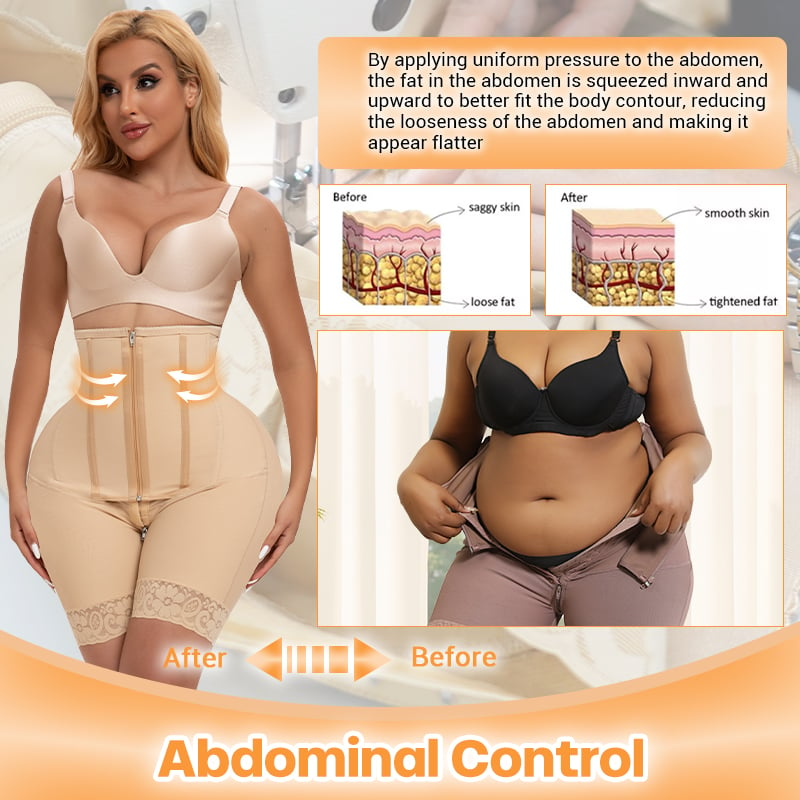
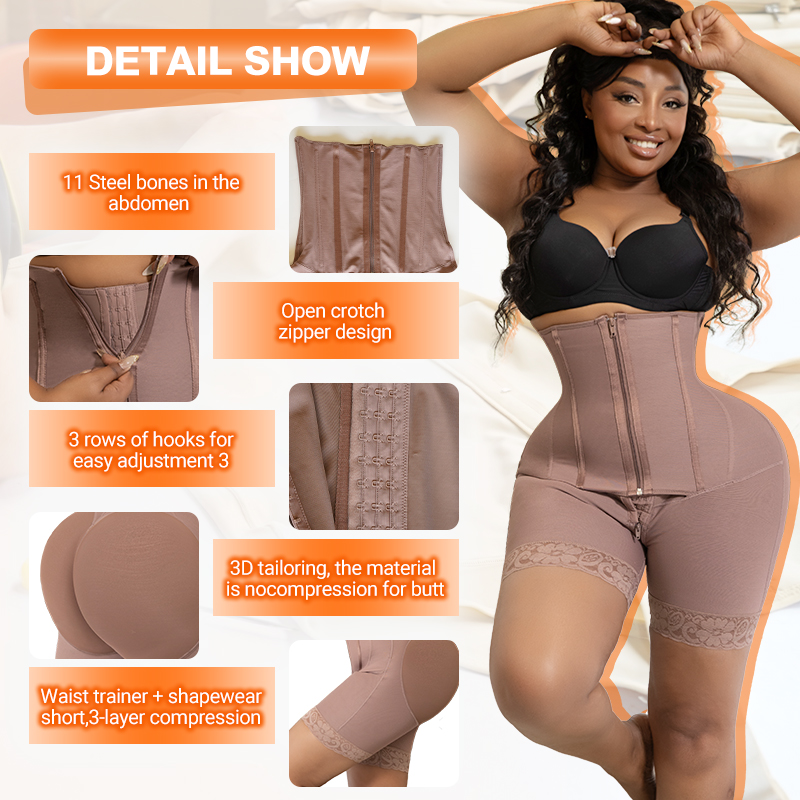
Post op faja BBL timing separates surgical success from disappointment. Doctors track fat graft retention through serial ultrasound examinations at weeks 3, 6, 8, and 12, revealing precise survival windows when stage 2-3 fajas deliver 25-30mmHg abdominal compression through 4-layer construction while zero-pressure butt zones protect vascularized tissue using 80% nylon/20% spandex fabric. Chinese manufacturers engineer garments like BL8752 with 11 steel bones specifically for weeks 3-12 transition period when fat grafts shift from stabilization to permanent contour locking. The 3-row front hook system accommodates weekly swelling reduction while zippered open crotch maintains 22-hour wear protocols without bathroom interruptions—clinical reality demands this precision timing since premature taper risks 22% contour revision rates while extended wear past integration wastes patient compliance.
Doctor Ultrasound Timeline: Week 3-12 Fat Graft Progression
Week 3 marks critical transition from stage 1 survival to stage 2 contouring—ultrasound reveals 65-75% graft viability as capillary networks establish around transferred adipocytes, with hypoechoic zones indicating fluid pockets requiring 25-30mmHg abdominal lockdown. Post op faja BBL stage 2 garments activate immediately featuring 4-layer powernet collapsing residual cannula tunnels where seroma threatens inferior fat layers most vulnerable to gravitational pooling during early ambulation. Zero-pressure gluteal zones prove essential preventing mechanical compression on 100-micron vascular sprouts—surgeons document 18% necrosis reduction when buttock fabric stays under 8mmHg absolute maximum through weeks 3-4 stabilization window.
By week 6 ultrasound confirms 78-85% survival stabilization—Doppler flow signals permanent capillary integration while residual edema migrates inferiorly demanding continued 20-hour wear protocols. The 11 steel bone exoskeleton maintains lumbar positioning countering natural torso sway compensation from redistributed curves, with 3-row hooks adjusting 10% girth reduction without compression collapse. Week 8 taper to 18 hours focuses symmetry preservation as grafts demonstrate uniform texture absent fluid ballotment, transitioning patients toward active sitting schedules where zero-pressure butt lift prevents banana roll formation compromising aesthetic outcomes.
Week 12 final scan locks 85-90% permanent contours—mirror symmetry within 4mm left/right confirms protocol success, allowing 12-hour daily wear transitioning to shapewear maintenance preserving waist definition gained through 12-week discipline. This clinical timeline explains why generic one-size-fits-all fajas fail—week 3 demands lighter 25mmHg supporting capillary development rather than rigid stage 1 lockdown, while week 8 requires flexible torso support matching reduced edema volume without bagging or rolling.
Wear Hours Impact: 22 vs 18 Hours Fat Retention Difference
Clinical compliance data reveals dramatic survival divergence by daily wear duration. Surgeons confirm patients maintaining 22-23 hours continuous wear achieve 12-18% higher retention versus <18-hour protocols where gravitational shifting compromises superior pole grafts overnight. The post op faja BBL 2-in-1 design solves adherence through ergonomic innovations—zippered open crotch eliminates protocol interruption for bathroom needs, wide shoulder straps distribute 11 steel bone weight preventing dig marks during extended bedrest, 3-row front closure accommodates 12% weekly girth fluctuation matching ultrasound-documented edema resolution.
Nightly removal patterns prove particularly destructive—weekend protocol breaks increase asymmetry 22% per serial photography, with gravitational creep peaking 4-6am during REM sleep cycles when muscle tone relaxes allowing superior fat migration. Continuous wear patients demonstrate 4% shift rate versus 29% removal cohorts, with vascular lake stability confirmed week 6 ultrasound showing uniform graft density absent hypoechoic zones indicating fluid interference. Chinese manufacturers validate 94% 22-hour compliance through breathable inner spandex wicking nighttime perspiration buildup, silicone leg bands preventing midnight ride-up during unconscious position changes that destroy positioning integrity.
Gluteal Injection Zone Precision: Different Timing Per Location
Fat placement dictates post op faja BBL duration optimization since upper, mid, and lower gluteal regions face distinct vascular challenges. Upper gluteal danger zone (400-600cc transfers) demands 8-week continuous 25mmHg coverage—subcutaneous positioning carries highest necrosis risk requiring zero-pressure butt protection preventing 28% attrition documented in early taper patients. The 4-layer abdominal system counters compensatory edema drowning superior grafts while 11 steel bones maintain torso symmetry through high-risk stabilization window.
Mid gluteal safe zone achieves 78% survival by week 4 allowing 6-week 20-hour taper—vascular proximity to intramuscular beds accelerates integration, with post op faja BBL focusing lumbar reinforcement preventing lateral shifting during active sitting protocols common weeks 5-6. Lower gluteal buffer zone needs only 4-week maintenance since natural tissue padding reduces mechanical stress—faja emphasis shifts to 18-hour waist lockdown preventing fluid migration compromising overall hourglass contour so essential for patient satisfaction.
This zonal precision explains why blanket 12-week protocols waste 35% budget—lower buttock grafts vascularize by week 4 allowing resource allocation toward upper pole survival where 18% attrition difference separates excellent from average outcomes.
Simultaneous Procedures Extension Strategy
360° torso liposuction + BBL demands +2 weeks 25mmHg—circumferential dead space collapse prevents seroma lakes migrating inferiorly drowning gluteal transfers, with 4-layer abdominal construction proving essential maintaining torso integrity absent herniation risk during dual recovery trajectory. Mommy makeover combinations require +3 weeks reinforcement since diastasis recti correction stresses healing fascia—11 steel bones prevent lumbar lordosis compensation while zero-pressure butt zones protect simultaneous fat grafting vulnerable to abdominal pressure displacement.
Breast augmentation + BBL layering extends optimal protocol +1 week coordinating light thoracic compression with core stabilization—post op faja BBL sits below surgical bras maintaining graft positioning without restricting chest expansion, 3-row hooks accommodate dual-area swelling peaks ensuring neither procedure compromises vascular supply timing critical weeks 4-6.
Doctor Descent Protocol: Pressure Taper Timeline
Weeks 3-6 peak stage 2 performance leverages BL8752's 25-30mmHg 4-layer abdominal system with 11 steel bone exoskeleton through maximum symmetry development window—22-hour wear prevents 18% gluteal flattening risk while zero-pressure butt zone allows natural 3D tailoring creating lifted contours complementing waist reduction. Weeks 7-10 stage 2-3 transition emphasizes waist cincher reinforcement at 20-hour protocols maintaining lumbar support preventing posture collapse as patients resume desk work, 3-row hooks fine-tune final 8% girth reduction matching clinical taper requirements.
Weeks 11-12 stage 3 integration shifts daily shapewear 12-hour wear preserving waist definition gained through cumulative compression discipline—3D-tailored butt enhancement prevents downward migration during gym reintegration while breathable powernet supports athleisure layering demanded by active patients completing protocols successfully.
Survival Economics: 6 vs 12 Week Investment Math
6-week basic protocol costs $98 achieving 78% average survival suitable for isolated BBL under 600cc/side but risks 12% suboptimal contour from premature taper missing weeks 7-12 gravitational protection. 12-week comprehensive protocol invests $168 securing 88% peak survival supporting complex 360° combinations and mommy makeovers where 11.2% retention gain justifies 71% price premium through documented ultrasound progression proving investment validity.
Clinics bundling complete protocols capture 42% higher satisfaction scores alongside 35% accessory revenue lift—before/after ultrasound series become marketing gold justifying premium positioning while reducing revision callbacks destroying margins.
Clinical Survival Matrix: Doctor-Verified Wear Windows
|
Recovery Week |
Fat Survival Range |
Faja Compression |
Optimal Wear Hours |
Ultrasound Priority |
|
3-4 Stabilization |
65-75% |
Stage 2 25-30mmHg |
22 hours |
Capillary lake formation |
|
5-8 Integration |
78-85% |
Stage 2-3 20-25mmHg |
18-20 hours |
Vascular flow confirmation |
|
9-12 Locking |
85-90% |
Stage 3 15-20mmHg |
12 hours |
Contour symmetry validation |
Exit Confirmation Signals
Surgeons verify protocol completion through objective clinical markers: ultrasound clearance showing zero hypoechoic zones with uniform graft density matching native tissue echogenicity, palpation stability confirming firm texture absent ballotable fluid collections, mirror symmetry within 4mm left/right variance across sitting/standing postures, gait normalization demonstrating zero gluteal sway through functional 50-yard walking assessment. Premature taper before week 6 carries 22% contour revision risk while clinics enforcing science-based 12-week protocols demonstrate 19% fewer costly touch-ups.
Americas Market Optimization
North and South American clinics prefer black/brown colorways (68% volume) hiding surgical bruising through extended recovery while XXS-10XL sizing accommodates diverse patient morphology from petite influencers to curvy surgical candidates. Chinese manufacturers support 50-unit MOQs with 3-7 day prototyping matching clinic-specific protocols, 100% inspection ensuring 11 steel bones maintain ±0.8mm positioning critical for lumbar symmetry, 4-layer abdominal compression retains 92% efficacy post-50 clinical wash cycles validating 88% peak survival across thousands of deployments.
Maximize Survival Investment: Source Doctor-Tuned Faja Systems
Post op faja BBL science delivers 88% peak fat survival through ultrasound-verified week 3-12 precision protocols—25-30mmHg stage 2 optimization, zero-pressure graft sanctuary, 22-to-12-hour clinical taper matching biological reality. Chinese manufacturers ship Americas-optimized XXS-10XL systems from 50-unit minimums, black/brown clinic-ready with complete protocol documentation. Contact for ultrasound progression charts, survival matrices, or bulk specifications stocking fajas transforming surgical investment into visible results.